
• ******* To read about the changes to the marketplace click here

Changes in ORP trend

MikeG

Non-member
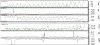
Anyone have any thoughts on this. My ORP has always sort of reached a plateau and then would drop when I did a water change. In the bottom graph you can see this and see a few small drops wgen I did some water changes. Over the last month, I am seeing a cycling rise and fall in the levels as shown in the graph on the top.

FYI, the pH measurement in the graph is of my calcium reactor that is controlled by the aquacontroller.

I tend to just try to keep things stable and not worry about an exact measurement as much which is why this seemed a bit odd to me.

Any thoughts?

Each temp peak in the top graph is one day. I am seeing a peek in ORP at night when the lights are off.

EDIT: On second look, I think it is just the scale of the graph that threw me off. Looks like in both graphs there is a change of about 35 in ORP. I really dislike this software and should just regraph in Excel so I can make everything standardized.
 

Attachments
  • graph.jpg
    graph.jpg
    73.2 KB · Views: 273
Last edited:
The daily ORP swing relates to pH. I discuss that here:

ORP and the Reef Aquarium
http://www.reefkeeping.com/issues/2003-12/rhf/feature/index.php

from it, skipping the long and detailed theorey section of pH/ORP:

The Empirical Relationship Between ORP and pH in Aquaria

While understanding the details of the theoretical relationship between pH and ORP is complicated, measuring it for a single aquarium is fairly easy. Figure 1 shows simultaneous plots of pH and ORP values over the course of several days in the aquarium of Simon Huntington. Clearly, the measured ORP and the pH are on exactly opposite cycles, as one would expect from a system where reactions involving oxygen are important (and as is shown by rH).

Does the reaction exactly follow the one H+/e- rule? Maybe not exactly. Figure 2 shows a plot of rH as a function of time using Simon's data. If the effects of pH on ORP were exactly removed by calculating rH using:

rH = mV / 29 + (2xpH) + 6.67

then one might expect rH to not have a diurnal cycle. In this figure, the data suggest that there is still a diurnal dependence to rH, possibly due to pH effects. I have seen data from other aquaria as well, and in those cases the same holds: that rH largely compensates for ORP changes with pH, but not perfectly. Since things other than pH (such as O2) may change during the night and day in aquaria, this experiment may be confounded by these other variables.

Simon also ran an additional experiment on his aquarium. He took a water sample, and added either sulfuric acid or sodium hydroxide to it to adjust pH. In this experiment, the other factors that might cycle diurnally in an aquarium are constant. The results are shown in Figures 3 and 4. The fact that the ORP goes almost exactly back to where it was at the start, despite the pH excursions, suggests that the acids and bases are not altering the "base" ORP, but are only impacting ORP through pH.

The ORP moves inversely to pH, as expected (Figure 3). But, the fact that the rH is generally not flat as the pH is changed (Figure 4), but rather tracks with pH changes, suggests that the mathematical conversion used (rH = mV / 29 + (2xpH) + 6.67) is overcorrecting for pH changes. That result in turn implies that the pH dependence of ORP may be less than predicted by the H+/e- ratio of 1.0. Perhaps this result indicates that in Simon's aquarium, some reactions with an H+/e- ratio below one are important in controlling ORP.

Overall, my suggestion for aquarists using ORP measurement devices is to be aware of how pH can influence ORP measurements, but to not overly emphasize specific pH corrections.
 
Back
Top