
• ******* To read about the changes to the marketplace click here

I wanted to test LEDs so I made a small test fixture

amdphenomx4

Non-member
The term small is quite relative here. The volume being lit is a 60G cube. For LEDs I used 6 Luxeon M in a very white configuration with the following diodes:

2 x 90 CRI min 3000K L73G
2 x Royal Blue B5G
2 x 80 CRI 5000K R33G
The bin is after the LED color. These are all using relatively good bins for the $5.00 I paid for each of the diodes, and all have been reflowed and work. I did damage a royal blue pad but it still works fine so they are quite durable for the size.

They were reflowed onto Sinkpad MCPCBs which have a great heat conductivity compared to other MCPCBs and they are working fine as of now. I used a 96.5Sn-3.5Ag reflow solder to attach the LEDs to the MCPCBs. It is also extremely conductive for heat which is why I chose it. I attached the chart I used for reference.
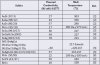
2006_August_TechData_Table1.jpg

The heatsink is a RapidLED 12" predrilled 1.5" wide black anodized with a 5W fan to keep the heatsink just a bit warm to the touch. The LEDs are being powered with 3 Meanwell LDD-1000HW drivers.

I went with high CRI diodes to better match the sun as well as have more color in the coral. Higher CRI lights have more output past the 550nm range.

As this is a test light, I am using 2 18.5V laptop PSUs in series to have the 24V for 2 Luxeon M at 1000mA on 3 LDD-1000HW drivers.

Aside from that, a link to pictures of coral under a 12000k halide vs the LED test. The white balance is manually set so the difference is due to lighting. It is overly blue and I unfortunately cannot shoot in RAW. A lot of purple that isn't there in real life.

http://imgur.com/a/K4QEw


I will be doing a test for a month or so to see how well corals grow as well as how color changes to see whether I need additional colors added, optics, or more light in general. They are running at 100% as of now, so they should be around as powerful as the 120W fixtures commonly used and without optics. My goal is to have an extremely low number of LEDs to light a large area with good coloration and growth.

For the first observations I have, the purple in the Tricolor Acropora is incredibly purple compared to under the halides. Some colors are duller due to the lack of blue, but some stick out better.

The stars (punny) of the show...
http://i.imgur.com/k6V8flkh.jpg
 
Last edited:
A one week update of how the corals look. As for colors, the blues are starting to look better but the green in the ORA Spongodes? is turning more yellowish than green, though it never was very green in my tank. Otherwise not much different. I also switched cameras to one which captured the color much much more accurately. This is almost exactly what the eye sees.

http://imgur.com/a/tK3cz

I did measure PAR at the bottom under the 250W vs the LEDs and the LEDs were only 20% or so less. With the fact the LEDs have no optics, I consider it wonderful. If I could find and add some 90 degree optics they would easily beat the halide for PAR. The bottom spread from each LED is a 7 foot cone, much more than the cone I need.
 
Weekly update
Corals are still alive and corals still have very nice colors. I did bug the clam before I took the images as the chalice was flipped. I also changed image hosts as Imgur wasn't uploading full quality very easily.
Album
 
An early update as I will be leaving tomorrow for a week. I moved the chalice to a disk as it wasn't well attached to the plug and it would grow better anyways. The tips of the tricolor acropora are lighter than they were originally for some reason. Otherwise there isn't much change.

Album
 
question. Why did you buy the raw chips and then flow them to stars? wouldnt it be better to go straight to the heatsink on HOT HOT HOT chips like those?
or another option is use the steeves led chips that are already mounted to copper plates.
Everything i have been told is: these chips need maximum cooling and stars will prevent/slow that cooling.
Are you a reflow jedi? lol im joking/curious.

other than that/ great build. Im going to be using a similar rig soon. 2x20w violet, 1x20w bridgeluxe 4k, 5x lux M royal blues, and some 3w normal blues to taste. All stuffed into a MH reflector. im building 4 of these to light a 144x48x36 for softies. only 3 if i can get away with it.
 
question. Why did you buy the raw chips and then flow them to stars? wouldnt it be better to go straight to the heatsink on HOT HOT HOT chips like those?
or another option is use the steeves led chips that are already mounted to copper plates.
Everything i have been told is: these chips need maximum cooling and stars will prevent/slow that cooling.
Are you a reflow jedi? lol im joking/curious.

other than that/ great build. Im going to be using a similar rig soon. 2x20w violet, 1x20w bridgeluxe 4k, 5x lux M royal blues, and some 3w normal blues to taste. All stuffed into a MH reflector. im building 4 of these to light a 144x48x36 for softies. only 3 if i can get away with it.

Sorry for the late reply. The amount of work and risk it would be to stick LEDs directly to a heatsink would be ridiculous. It would require insetting traces and a solder able material such as steel.

As for the LEDs and what I did, yes I did reflow them myself. They were under 7 dollars each to make and reflow with an electric stove and the second batch I reflowed a few days ago looks fantastic. The 20mm stars I used were from a company called SinkPAD which are apparently made to allow a lot of heat transfer, which I can back up with 10W emitters having no issues. I'm also using a heatsink which is only meant to handle 6 3W emitters, so overall I'd say they're fine for heat. As you will see in the album, the new diodes have a much whiter MCPCB. This time I didn't burn them much.


As far as growth and color goes with the current update which is LONG overdue, the ORA Spongodes is much more yellow than under the halides, and the chalice might have turned brown due to me not cleaning the plexiglass I am protecting the LEDs with. The tricolor acropora is lighter now, but still shows growth.

Album http://amdphenomx.minus.com/mbiQYUiAV1YP3j

As for those optics, I was actually going with tighter and smaller optics in the 50 degree range to save space in the heatsink. Realistically any optic is fine, some are just huge.
 
Last edited:
Thats pretty crazy man. I dont know if i would ever be willing to try that with $5-10 leds. Maybe i will try it one day with the cheapies. My hands shake too much for that precision stuff.

pretty impressive that they can handle that much heat. Ive been reading up on those sinkpad stars. They even have aluminium stars for luxeon m chips.

Finding smaller optics for these is tough. using whatever you fine....."any" optics should be able to flag down airplanes. Since my rig soesnt have to be small, im just going to use a halide reflector to get a nice blend.

Do you think the corals changed color simply because of the lesser par with the dirty plexi, or could it also be the spectrum change/adjustment period?

thanks for the previous diy explanation and the update.
 
I just found your NR thread. Its kinda going in a strange direction there with the cri bashing. Either way, thanks for updating us with the experiment. I for one am interested.
 
Thats pretty crazy man. I dont know if i would ever be willing to try that with $5-10 leds. Maybe i will try it one day with the cheapies. My hands shake too much for that precision stuff.

pretty impressive that they can handle that much heat. Ive been reading up on those sinkpad stars. They even have aluminium stars for luxeon m chips.

Finding smaller optics for these is tough. using whatever you fine....."any" optics should be able to flag down airplanes. Since my rig soesnt have to be small, im just going to use a halide reflector to get a nice blend.

Do you think the corals changed color simply because of the lesser par with the dirty plexi, or could it also be the spectrum change/adjustment period?

thanks for the previous diy explanation and the update.

I would say it was the fact I wasn't giving them enough light due to the plexiglass. I was a little lower in relative PAR than the metal halides were and I wouldn't be surprised if it was too low. Of course these LEDs are using the 120 degree stock optics so a lot of light is wasted. I'll find out in another week if they start to color back up. My uncalibrated DIY PAR meter was only giving around 90-100 PAR on the sandbed without the plexi.

On the Sinkpad emitters, I bought the aluminum ones and they had a little issue with their price tiers of which 30 pieces costed the same as 45, so I made out like a little bandit with a bunch of extras for future expansion along with some Cree MK-R ones for the hell of it.

As far as soldering them, it wasn't that bad but I have relatively steady hands. It's basically a hands off thing where, you put on a small amount of solder paste on the pad, and place the LED on the pad properly. If done right, the reflow will pull the LED down and push out excess solder into balls.

I just found your NR thread. Its kinda going in a strange direction there with the cri bashing. Either way, thanks for updating us with the experiment. I for one am interested.

Yea, I don't know what his beef with it is. I think he's just a bit angry he was wrong, horribly, in every way possible.

I'm going to see if someone in an IRC channel I'm in has any spare driver boards. I'm messing with alternate options as the wired ones are horrible to work with.
 
Last edited:
My concern would be getting solder between the 3 conection pads. The way the led drops into the slot when heated makes sense though. Im going to try this with a old 1w led i have this weekend.

Im still following, keep us up to date. :)
 
My concern would be getting solder between the 3 conection pads. The way the led drops into the slot when heated makes sense though. Im going to try this with a old 1w led i have this weekend.

Im still following, keep us up to date. :)

It's pretty darn foolproof for what it appears to be. I actually found reflow soldering the diodes to be easier than soldering the rest of it. Basically I used tweezers to push the diode down gently while it was still reflowing so all excess solder was pushed out and balled around the edges. Surprisingly they're quite durable too as you saw from that broken diode. It still works after almost 2 months. I was actually surprised with how easy it was. I was worried I would damage them or humidity would make it crack, or it wouldn't work in general. Aside from the first batch having a few slightly damaged lenses, it was very easy. Of course batch 2 where I avoided damaging the MCPCB is much better.

If you want to reflow, I would use an electric stove top and put it on low for around a minute then ramp it up to medium until it starts to reflow to better match the suggested heating curve. I didn't the first time though, so it's not imperative.
 
So just in case anyone was curious about how it turned out...

The lights themselves grew coral and aside from blue keep color fine. I'm finishing up 1 fixture now and waiting for parts for the second and third. I did deviate from my original plan by going wireless however and putting an arduino in each light. Basically it keeps the lights from sticking to 100% if the power goes off and on. Also it allows me to wirelessly communicated to them. Also I got rid of the LDDs and went with a smaller/easier to manage 6 channel ebay driver. It's also cheaper. But yea, I can control them wirelessly and technically could make them programmable wirelessly but that's not very important. Basically I'm just tweaking the arduino code and waiting for optics to test and light 1 will be done.

In case you want to see the light wirelessness in action... http://www.youtube.com/watch?v=RiUgqPEKiUo

As the video suggests, if you want me to do a close up hardware video I can do that as well. It's not like I have a light with a dozen hard wired wires coming out of it that are impossible to easily move around.
 
Back
Top