• ******* To read about the changes to the marketplace click here

Male skunk clown jumped

~Flighty~

Now with more baby
:( So sad. The male of my breeding skunk pair jumped last night. I had not had a chance to properly try raising the babies, but was getting set up to do so and had practiced collecting one batch so far.

Their latest batch hatched last night and I didn't collect them.

What a bummer.
 
As I told you, I lost my breeding pair to disease recently. I was very heartbroken.

I'm very sorry to hear that there's been another loss.

Did he leave a goodbye note? Or was it another jumper for no apparent reason?
 
Oh, that's terrible! Sorry to hear that, Cindy! [smilie=1,4,5]

How hard is it to get a replacement male that may mate up with your female, do you know? Are you going to try?
 
Bummer.... That pair was so cute :(
 
Sorry Nate :( (They were originally his pair)

I took a chance and got the small orange variant pink skunk that has been at AG for ages. I normally am totally against putting in any clown without QT, but in this case with one that has been in the store for so long, I risked it. Pink skunks are communal and when part of a pair gets eaten there is almost always a juvi to immediately take the male role. I put this guy in right away hoping that there is a tiny chance the breeding cycle of the female won't be messed up. I know it is very unlikely, but I thought it was worth the try.

The little guy is in the anemone and showing very strong submissive behaviour. I also transferred two baby perks from my fuge at the same time to temporarily confuse the female and spread out her aggression.

Wish me luck.
 
I took a chance and got the small orange variant pink skunk that has been at AG for ages.

Are there different varients? Reason I ask is last year I ordered from MDLive a "mated" pair of skunk clowns... The female is orange with the right striping, and the male looks exactly the same but pinkish. They hung out together all the time until I added an anemone and she abadoned him for the most part. Now during the day they do hang out together and do the tell tale wiggling, nipping, etc but at night sleep apart.

-Mike
 
skunk clown

curious - are they known for jumping or is this rare for them???? Should they be kept with a closed top or egg crate.
 
There are a few different types of skunk clownfish. These are pink skunk clowns A. perideraion which you can tell by the stripe down the back and the cheek stripe. The are usually solid pink, but come in color variants from very light pink to yellow to orange and two tone combinations. The akallopisos which is just called the skunk clownfish and the sandaracinos (orange skunk) both only have the stripe down the back and the Maldaves or A. nigripes only has the cheek stripe.

RIP
attachment.php


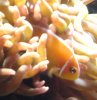
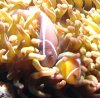
here is the new guy
attachment.php


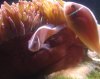
and with the grieving widow
attachment.php
 

Attachments

  • DSC02003.JPG
    DSC02003.JPG
    64.9 KB · Views: 261
  • DSC02008.JPG
    DSC02008.JPG
    96.3 KB · Views: 261
  • DSC01725.JPG
    DSC01725.JPG
    38.2 KB · Views: 256
curious - are they known for jumping or is this rare for them???? Should they be kept with a closed top or egg crate.
Any fish can jump and clowns do sometimes, but it is pretty rare when they are in a happy nonfighting pair especially with a large host anemone. I don't know what happened in this case, but it isn't completely unheard of.

it is nice to see the new skunk take immediately to the anemone with no acclimation time. This is one of the few anemone clown species combos which can do it without damage to the clown.

Also I am very surprised at the way they are relating to each other. I thought I had no chance of getting something that had a prayer of a pairing, but it seems like they are liking each other so far.
 
Last edited:
The orange is a really nice color variant that is from a specific collection locale. Sometimes you'll see an bunch of them hit the stores, but mostly it is a rare find.
 
So if they mate, will their babies be peach color?
 
I'm not sure that the color is genetic, it may have to do with the food that the fry get in early development, the species of host anemone or any number of things. The color does seem to stay once they are adults, but they can fade a but with poor nutrition.
 
Back
Top