• ******* To read about the changes to the marketplace click here

Requesting advice on RODI system

SayrinaDVM

Member
BRS Member
Hello again! This time I’m looking for advice/suggestions for a user-friendly point-of-use RODI system :)

I’m sure there are things I haven’t thought of, so advice on even the most minor of features would be appreciated!

  • Budget = not a primary concern
    • Between my health issues and the demands of my husband’s job, we’re willing to shell out more for convenience and user-friendliness (i.e., features that would reduce overall time/effort and make maintaining the system more straightforward)
    • So far my list of desirable features includes inline TDS meters and automatic flushing
    • What else should I look for (or avoid)?
  • Being able to tap into the system to get RO water for drinking would be nice but isn’t a must.
  • RODI production capacity: I think this depends on whether larger/higher capacity systems are more annoying to move/re-install, in your experience
    • Although we only have a BioCube 32 at the moment, we’re planning to start a much larger (200ish gal) second acrylic tank within the next few years once we move, If a large system wouldn’t be more difficult to move, then it seems sensible to get a RODI system that would be able to support both tanks. Would 150 gpd be enough?
    • The alternative would be to get a smaller system just to support the BioCube for now, and wait until the new tank is underway before getting anything larger (in which case recommendations for both would be helpful)
  • If we go with a larger-capacity model], something modular (or at least easily modifiable) that uses standard-sized parts would be great, so that we can adjust the number and types of stages based on future differences in water quality)
  • Space = not a concern (so compactness or portability is low on our list of important features)

For systems, the brands that I’ve seen recommended on R2R are Bulk Reef Supply, Spectrapure, and Buckeye Hydro, but I’m of course open to others.

Thanks in advance!
 
Hello again! This time I’m looking for advice/suggestions for a user-friendly point-of-use RODI system :)

I’m sure there are things I haven’t thought of, so advice on even the most minor of features would be appreciated!

  • Budget = not a primary concern
    • Between my health issues and the demands of my husband’s job, we’re willing to shell out more for convenience and user-friendliness (i.e., features that would reduce overall time/effort and make maintaining the system more straightforward)
    • So far my list of desirable features includes inline TDS meters and automatic flushing
    • What else should I look for (or avoid)?
  • Being able to tap into the system to get RO water for drinking would be nice but isn’t a must.
  • RODI production capacity: I think this depends on whether larger/higher capacity systems are more annoying to move/re-install, in your experience
    • Although we only have a BioCube 32 at the moment, we’re planning to start a much larger (200ish gal) second acrylic tank within the next few years once we move, If a large system wouldn’t be more difficult to move, then it seems sensible to get a RODI system that would be able to support both tanks. Would 150 gpd be enough?
    • The alternative would be to get a smaller system just to support the BioCube for now, and wait until the new tank is underway before getting anything larger (in which case recommendations for both would be helpful)
  • If we go with a larger-capacity model], something modular (or at least easily modifiable) that uses standard-sized parts would be great, so that we can adjust the number and types of stages based on future differences in water quality)
  • Space = not a concern (so compactness or portability is low on our list of important features)

For systems, the brands that I’ve seen recommended on R2R are Bulk Reef Supply, Spectrapure, and Buckeye Hydro, but I’m of course open to others.

Thanks in advance!
this is the RO/DI system I run it has a 2:1 ratio so much less waste water 1:1 being the best but at a substantial cost.This system has been super dependable and Marc is a great guy if you have any RO/DI system questions and he builds them right in Texas.

 
Aqua fx is another good brand. You will also want to look at the source of your water (city or well) and the pressure of your water supply. Well sources might require more particulate pre filtering and if you are on city water you will want to know if they are treating with chlorine or chloramine to remove properly before going through the membrane. If the pressure of your source water is low you will want a booster pump, a booster pump also improves efficiency.

You can easily add a drinking water tap to any system, you just need to t off the line after the Ro system/ auto shut off valve and add a drinking water expansion tank. You will also want to re mineralize the drinking water using a cartridge since it’s not good to drink 0 tds water.
 
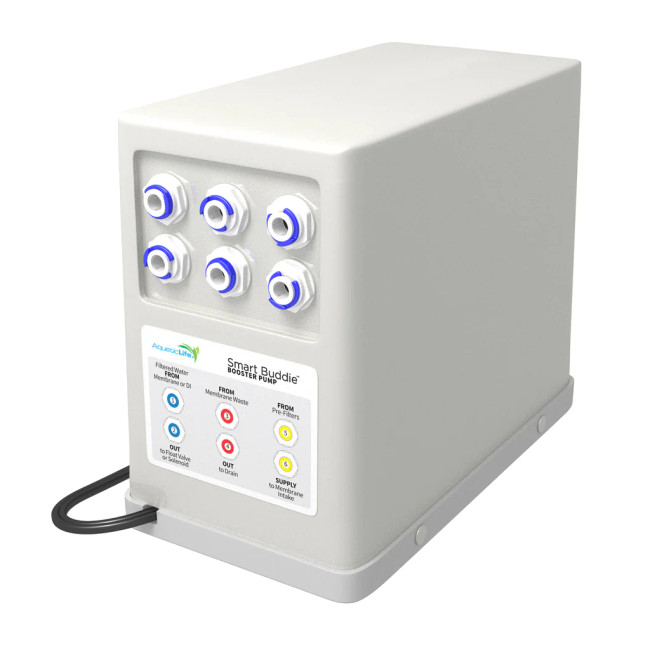
Knowing the pressure of your water supply matters for proper operation and efficiency. Most RO systems work best at pressures higher than most towns can offer to your house. While a booster pump is a great accessory to have in your system, you also mentioned wanting automatic flushing. I would suggest you look into an AquaticLife Smart Buddie RO Water Booster Pump. This is a booster and will flush the membrane on each power cycle. The output of this device is limited to a maximum of 100 gallons per day. I have several Systems with double the output, but I love my Smart buddy paired with a Spectrapure 90 GPD setup. I can't imagine needing 200 gallons in a 24 hour period so I don't know if bigger is better. For a quality system I would recommend this booster with auto flushing highly for your first set up. As far as the RO unit itself, I don't think the brand really matters as much as the quality of the filters that are in it. Bulk Reef systems, their resins, and filters have worked well for me. A TDS meter can be added to added to any system and should be, they're great to see a reading of Zero coming out of the last vessel.

As mentioned above, if you can't confirm your town uses Chloramine instead of Chlorine, assume they do. This requires a slightly more expensive carbon filter, but the cheap filter will release some bad by products when being asked to filter Chloramine.

In Foxboro my water service has 52psi, the booster brings up to 80psi. The higher pressure isn't needed for more output, its needed to reduce the ratio of waste water down the drain.

My final advice? continue with Kevin from All Things Aquatic. His prices were always good, and if you want it installed....its what they do.

Best of luck in whatever path you go, and happy to show my system/systems to you in Foxboro if you ever find yourself in the area. I'm also on vacation next week so its a great time to get ahold of me if you'd like to see someone's setup.
 
Knowing the pressure of your water supply matters for proper operation and efficiency. Most RO systems work best at pressures higher than most towns can offer to your house. While a booster pump is a great accessory to have in your system, you also mentioned wanting automatic flushing. I would suggest you look into an AquaticLife Smart Buddie RO Water Booster Pump. This is a booster and will flush the membrane on each power cycle. The output of this device is limited to a maximum of 100 gallons per day. I have several Systems with double the output, but I love my Smart buddy paired with a Spectrapure 90 GPD setup. I can't imagine needing 200 gallons in a 24 hour period so I don't know if bigger is better. For a quality system I would recommend this booster with auto flushing highly for your first set up. As far as the RO unit itself, I don't think the brand really matters as much as the quality of the filters that are in it. Bulk Reef systems, their resins, and filters have worked well for me. A TDS meter can be added to added to any system and should be, they're great to see a reading of Zero coming out of the last vessel.

As mentioned above, if you can't confirm your town uses Chloramine instead of Chlorine, assume they do. This requires a slightly more expensive carbon filter, but the cheap filter will release some bad by products when being asked to filter Chloramine.

In Foxboro my water service has 52psi, the booster brings up to 80psi. The higher pressure isn't needed for more output, its needed to reduce the ratio of waste water down the drain.

My final advice? continue with Kevin from All Things Aquatic. His prices were always good, and if you want it installed....its what they do.

Best of luck in whatever path you go, and happy to show my system/systems to you in Foxboro if you ever find yourself in the area. I'm also on vacation next week so it’s a great time to get ahold of me if you'd like to see someone's setup.
I took your advice and contacted Kevin at All Things Aquatic. I’m not sure when I’ll hear back from him, though, and there’s a sale on RODI systems at Bulk Reef Supply that ends this evening. It sounds like I should be able to just go ahead and order a RODI system for ATA to install, though, so can I just run this by you?

This is what I’ve currently got in my Bulk Reef Supply cart:

AQUATIC LIFE Smart Buddie RO/DI Booster Pump - For 50-100 GPD Systems

6 Stage Deluxe Plus 100 GPD RO/DI System

Add-On Faucet Kit

Should I also get this?
200 GPD Water Saver Upgrade Kit


If you would recommend adding and/or removing anything, please let me know. Thanks so much in advance!
 
In most area of MA you should be able to get away with a 5 stage unless you run well water or your water source has crazy high salt counts in ppm. Even so the RO does most of the heavy lifting in desalinization unit, the DI just remove the remainder of the ions. Dual stage DI doesn't really do much other than reducing the frequency of you changing the DI resin, but at the end of the day it's not a big difference.

This gets you the same price as a 6 stage but with a water saver.

If you do get a booster pump, saltwater aquarium has a sales on them for 20% off right now and they are tax free. They are also in general a much better company than bulk reef imo.

Or you can use a simple booster pump on the feed water line similar to this to bring up your overall feed water pressure to the RO if you don't want deal with the aquatic life plumbing, which is what I use. This pump also allows you to tune the boosting pressure with an allen wrench on the pump head.
 
Last edited:
In most area of MA you should be able to get away with a 5 stage unless you run well water or your water source has crazy high salt counts in ppm. Even so the RO does most of the heavy lifting in desalinization unit, the DI just remove the remainder of the ions. Dual stage DI doesn't really do much other than reducing the frequency of you changing the DI resin, but at the end of the day it's not a big difference.

This gets you the same price as a 6 stage but with a water saver.

If you do get a booster pump, saltwater aquarium has a sales on them for 20% off right now and they are tax free. They are also in general a much better company than bulk reef imo.

Or you can use a simple booster pump on the feed water line similar to this to bring up your overall feed water pressure to the RO if you don't want deal with the aquatic life plumbing, which is what I use.
Thanks so much for the recommendations and info!

We're not on well water and I don't think our water source has crazy high amounts of anything (though I should note that I haven't done any actual tests), so a 5-stage system sounds like it would be fine.

Just to confirm, the only things that I would need to get from Bulk Reef Supply specifically would be the 5 Stage Premium Plus 200 GPD Water Saver RO/DI System and the Add-On Faucet Kit?
 
I would assume so, but double check your faucet connection and whether the faucet kit is absolutely necessary.

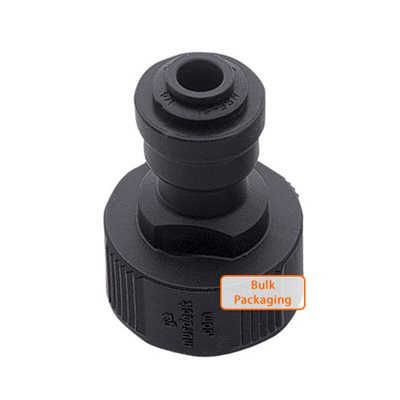
I hook mine up to my washer cold faucet (typical 3/4 GHT) with an adapter and runs the product water into a 5G bucket from home depot. You can install a float switch in your product tank to shut off the system or I just have Google home automation to time the shutoff knowing that my 150gpd system fill a 5G bucket every hour. Install what's fitting for your particular plumbing situation, or have someone come take a look.
 
I would assume so, but double check your faucet connection and whether the faucet kit is absolutely necessary.

I hook mine up to my washer cold faucet (typical 3/4 GHT) with an adapter and runs the product water into a 5G bucket from home depot. You can install a float switch in your product tank to shut off the system or I just have Google home automation to time the shutoff knowing that my 150gpd system fill a 5G bucket every hour. Install what's fitting for your particular plumbing situation, or have someone come take a look.
To be honest, things like plumbing/connections/etc. is where I feel like I'm in way over my head. (The only thing I know for certain is that our kitchen and bathroom faucets don't take adapters, so any RODI system we get would need to be attached to the plumbing underneath.)

If I understand this all correctly, though, the BRS Faucet Kit is the add-on that I need if I want to be able to get RO water from the system for drinking?
 
To be honest, things like plumbing/connections/etc. is where I feel like I'm in way over my head. (The only thing I know for certain is that our kitchen and bathroom faucets don't take adapters, so any RODI system we get would need to be attached to the plumbing underneath.)

If I understand this all correctly, though, the BRS Faucet Kit is the add-on that I need if I want to be able to get RO water from the system for drinking?
Yep. It is just an add on if you want to store the water coming out of the RO (mine usually at 10ppm ish) before it goes into the DI which brings it down to 0ppm. As Chris mentioned earlier it is actually not a good idea to drink demineralized water since your body does need to take in minerals necessary to function.

Most places where I see RO units being installed for human consumption are in areas such as American Southwest (AZ, the Navajo nations etc.) where their feed water is in the brackish zone (salt contents 500 ppm above), so their RO units help to bring it down to below 100ppm so it's drinkable similar to our tap water.
 
Back
Top