
• ******* To read about the changes to the marketplace click here

Using acrylic and other materials for DIY sump baffles

Intheflesh

Non-member
Its been a while since I've DIY'd a sump.
I want to install a few baffles in a 5.5g to use as a sump for my 18" cube. I know that acrylic swells in water, and has been know to crack sumps. How much clearance should you allow for expansion when cutting the baffles?

What about other materials like PVC or HDPE? both are readily available and easy to work with.
I'd consider glass, but I have never had good luck with getting a clean break.

Here's a simplistic view of what i'm looking to do
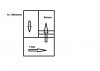
Untitled.jpg
 
You can always go to lowes and get the glass and they will cut it for you for free
 
Similar to what Josh posted.........I have a local glass shop that cut what I wanted.
Just gave them the dimensions and even polished the edges :)
 
I agree that glass in glass is best, but at the same time acrylic can work fine as well. For glass in glass you want 1/16th clearance on either side (standard tank building clearance). For acrylic in glass, use at least 1/4" thick acrylic and allow more like 3/16th on either side and you should be fine. Also when installing acrylic in a glass tank, it's best to have fairly thick globby silicone seams in front and back of the baffel so it stays firmly in place even though the acrylic doesn't properly bond to acrylic.
 
Grab some free tanks like I do here and take the trim off and then you have glass for baffles. Last sump I made was a 125g 6ft tank and it just so happens the 18 inch hight of a 40g breeder tank is the perfect width for the baffles on the 125g just had to cut them to the desired height
 
Acrylic may work for a fair amount of time, but it's going to fail eventually. Save yourself the headache down the road and use glass.

I've built a few sumps and never had any issues with only 2 baffles between each section. I get no micro bubbles with just an under then an over feeding into my return.

I'd also suggest a single 'over' baffle on the intake with a filter sock holder.

Sent from my SM-G930V using Tapatalk
 
agreed with glass. as mnavik posted, make sure you get the polished edges!! The first sump I made, we didn't get the edges polished and I can't even count how many times I sliced my hand / fingers while working in the sump :( ...

And as JohnK posted, if you do decide to go with acrylic, make sure there's decent amount of silicone to hold it in place :)

Sent from my SM-G930T using Tapatalk
 
My sump has the exact same flow layout. Bought a 40 gal breaker at pet is dollar a gallon sale. I used glass got it all in 1/4 inch cost me 40 bucks. Make sure you have them sand the edges so you don't have to worry about glass splinters. I also had them take a notch off of one corner so it would not puncture the silicone already in the tank.


Sent from my iPhone using Tapatalk
 
+1 to everyone who says that Acrylic is not a long term solution. Acrylic does not bond well with silicon and will fail eventually. Just get the glass cut so that you don't have to worry.
 
you can fit a skimmer and a return pump next to each other in a 5.5 gallon tank? That distance cannot be more than 6-8 inches, right! I assume you have spaced that out. I guess everything is so tiny...even compared to a 75 gallon setup.

As another posted noted, I don't think you need 3 baffles for the last chamber. I use 2 and there are no micro bubbles. The original design of my sump had 3, but one came off - acrylic on glass. I didn't see the need to fix it as it gave me about 3 inches of extra space. The wider the space, the slower the flow, and less chance the bubbles will be pulled downward. So maybe use 2 baffles in the same allotted space.
 
While I agree that glass in glass is a better solution, AND silicone should never be expected to hold a glass water holding vessel together - I have 10 year old sumps with acrylic baffles, and I know of numerous old school (like 20 yrs old) oceanic tanks with acrylic overflows silicone in place, that would disagree with the inevitability of failure. Silicone to glass is clearly a inferior bond compared to other materials that like silicone better - but it does work for the right applications. If anyone doesn't believe me, try removing a baffle or overflow that I have installed in a glass tank and see how easy it is :)

Just sayin......
 
Back
Top