• ******* To read about the changes to the marketplace click here

Bulkhead leaking

sdexcalibur1

Fish junkie
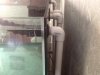
I have 4 slip bulkheads the one pc molded kind, not the kind that gets threaded on. 2 of these are leaking ever so slightly but still leaking none the less. The drip is coming from the flange(if that makes sense) not the hole. My question is would silicone bond to the glass and rubber long term to stop the leak. Really don't want to cut out the plumber to replace the bulkheads. Any thought would be helpful. Right now it's just a fresh water test fill.
 

Attachments

  • image.jpg
    image.jpg
    86.5 KB · Views: 282
  • image.jpg
    image.jpg
    87.5 KB · Views: 274
Are you using rubber "Uni Seals" if so drain the tank down below the seals and dry it well (hair dryer) and use some RTV it should seal though I don't see why that's necessary.

Jim
 
Which ever ones you had on the tank Jim, not sure if crud got between the glass and the rubber. Which prevented it from achieving a watertight seal, but unfoutunally their is a couple drips. "Rtv" that readily availible at the local big box store? I'm going to look it up now.
 
Don't get the type that says "Mold Resistant" it's antibacterial and not good for aquarium use.

Jim
 
Don't get the type that says "Mold Resistant" it's antibacterial and not good for aquarium use.

Jim

I've heard this said before but have yet to see an msds that actually lists an antibacterial/fungal agent. (Not saying it is definitely not there but...)

All silicone is inert once it is FULLY cured.The big difference between ge silicone I and II (all now made by the momentive company BTW). As this is where I think this comes from is the curing. Silicone I releases an acid while curing to cure faster (that's why it smells like vinegar) the other is a neutral cure (meaning no additives to speed up the process) and needs AT LEAST 7 days to cure.

The problem is when people use a neutral cure silicone and fill the tank with water after a day. The truth is no uncured silicone is reef safe.
John K, did I miss anything?
 
I've heard this said before but have yet to see an msds that actually lists an antibacterial/fungal agent. (Not saying it is definitely not there but...)

All silicone is inert once it is FULLY cured.The big difference between ge silicone I and II (all now made by the momentive company BTW). As this is where I think this comes from is the curing. Silicone I releases an acid while curing to cure faster (that's why it smells like vinegar) the other is a neutral cure (meaning no additives to speed up the process) and needs AT LEAST 7 days to cure.

The problem is when people use a neutral cure silicone and fill the tank with water after a day. The truth is no uncured silicone is reef safe.
John K, did I miss anything?

I think you covered it Chris :)

I have heard a lot of things about "Mildew resistant" silicone but I don't believe most of those things. I have never heard of any silicone that actually had any anti-mildew additive listed in the MSDS sheets. I have heard that all silicone is inherently mold and mildew resistent due to the physical properties of it's surface once cured, and somewhere someone in marketing thought of adding the "mildew resistant" label to make one product stand out from it's competitors - this I do believe.

As for the leaking uniseals, in the picture it looks like the pipes, or at least the closest pipe, is slightly tilted (not perfectly vertical). If this is true, then that means that the pipe section in the uniseal is twisting / levering ever so slightly in the seal, and I'd be wiling to bet that that could cause the leak. I'd put a level against that pipe, and if it's not squarely vertical I would correct it so that is is %100 straight and then see if the leak stops.
 
He feels pretty sure the leak is in the outer seal and it appears like that from the picture, I have used uniseals many times without a problem, that's my old tank with the old uniseal, I would have replaced them along with the new plumbing.

Jim
 
He feels pretty sure the leak is in the outer seal and it appears like that from the picture, I have used uniseals many times without a problem, that's my old tank with the old uniseal, I would have replaced them along with the new plumbing.

Jim

You don't think that uneven pressure from a twisting pipe could cause a leak? Seems very likely to me, but I don't have much uni-seal experience so I defer to you Jim....
 
You don't think that uneven pressure from a twisting pipe could cause a leak? Seems very likely to me, but I don't have much uni-seal experience so I defer to you Jim....

I think its very possible, even more so with the older rubber not being as flexible as newer seals.

Jim
 
It's All new plumbing, same uniseals. Their pushed out ( not 100%) plumb because I though if I applied more pressure against it it might seal better. The PVC that goes through the seal ( adapter) has that weird hex that goes around the PVC. Maybe that's where I went wrong. But picked up the RTV, says mildew and mold resistance, but also says for aquariums on the front. Only stuff I could find. I just applied it to the outside. I'll let it sit tonight and flood test it tomorrow. Label says fully cured in 24 hours. If still dripping I'll go to plan B. What's funner that doing something once..... Doing it twice.
 
It looks like the pipe leading down from the bulkhead is a bit crooked , this could be the problem . but to be safe you should drain it down and get some RTV anyway or GE silicone 1 use some denatured alcohol to wipe it off with it doesn't stick to that .
 
I wouldn't trust the 24 hr cure time. At least cure it until it no longer smells, and I'll bet that will be more than a day.
 
Back
Top