Coffee with Mango
Non-member
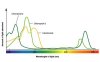
I've been reading a lot about whether zooxanthellae make use of UV light (at and below 400 nm) and based on articles in AdvancedAquarist.com, they seem to use it very efficiently. If I recall, this is also the wavelength that penetrates deepest into the water.
The action looks something like this:
So why is it so hard to find products that hit this range? The only LED fixture I can find that hits this range is the new AI Hydra with 400 nm chips. The only T5 bulb that I can find that hits this range is KZ Fiji Purple (with the added bonus of a touch of red at 660-670 nm).
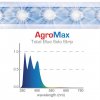
The agriculture industry seems to have latched onto this range. I found this interesting well-priced 48" water-resistant LED bar that targets the 380 nm to 500 nm range exclusively:
Would this be a good way to supplement LED products currently available to the aquarium industry? How much UV is too much UV? Would going into this range help control diseases? Would it kill off beneficial tank bacteria? How can I measure how much is getting to the corals if regular PAR meters don't tell the story in this nm range?
The action looks something like this:
So why is it so hard to find products that hit this range? The only LED fixture I can find that hits this range is the new AI Hydra with 400 nm chips. The only T5 bulb that I can find that hits this range is KZ Fiji Purple (with the added bonus of a touch of red at 660-670 nm).
The agriculture industry seems to have latched onto this range. I found this interesting well-priced 48" water-resistant LED bar that targets the 380 nm to 500 nm range exclusively:
Would this be a good way to supplement LED products currently available to the aquarium industry? How much UV is too much UV? Would going into this range help control diseases? Would it kill off beneficial tank bacteria? How can I measure how much is getting to the corals if regular PAR meters don't tell the story in this nm range?