• ******* To read about the changes to the marketplace click here

Reef_Engineer's 300G System Build

I'll never use another check valve. Had every type available and all fail at some point. A vacuum break in your return is foolproof. Even leaving enough volume in your sump is better than a check vale in my opinion but you'll burn through your fleece roll until the level in the sump is correct. One day that valve will fail to seal when the pump is off, and it will all end up in the sump anyway. A 3/32" hole high on your return will not fail and break the siphon when your pump stops every time.

Best of luck with what method you choose.
 
IMG_2942.jpeg


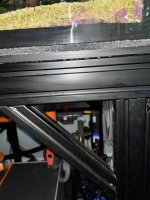
Overflow plumbing in progress. Getting stuff for return plumbing tomorrow.
 
I'll never use another check valve. Had every type available and all fail at some point. A vacuum break in your return is foolproof. Even leaving enough volume in your sump is better than a check vale in my opinion but you'll burn through your fleece roll until the level in the sump is correct. One day that valve will fail to seal when the pump is off, and it will all end up in the sump anyway. A 3/32" hole high on your return will not fail and break the siphon when your pump stops every time.

Best of luck with what method you choose.
These are wise words here! I always used to have returns coming over the top, and used siphon breaks, but these come in the back wall so there are a few inches (about 3”, or 28 gallons) of drain down that'll occur even without a siphon. It might be ok, as the sump is giant, and i may not end up using the check valves.

Running calcs now, that drain down volume is just 4.5” of my sump, which i definitely have….

So i probably wont do the check valves now. Hah! I wonder if BRS takes returns!
 
Most hobby shops carry small diameter silicone tubing used for fuel lines in nitromethane powered models. a small hole drilled on the underside of your first internal return fitting, just slightly smaller than the OD of the tubing, will give you a flexible vacuum break that you can position at any height you choose. I use a magnetic ATO tube holder to set the height and turn the hose horizontal so there no ripple or vortex visible.
I have tons of this tubing as I'm an R/C nut too. Happy to give you a couple lengths when you return the vacuum handles. It's not very expensive if you need to source the stuff right away.
 
I'm not sure if you're running a fleece roller, but I had to adopt this method as I discovered my fleece would advance way too far due to the high water level in the sump after a power outage. Some rollers know they have run too long and will stop, but now they need to be reset for a runtime error. Not all rollers work this way but something to investigate.
 
Most hobby shops carry small diameter silicone tubing used for fuel lines in nitromethane powered models. a small hole drilled on the underside of your first internal return fitting, just slightly smaller than the OD of the tubing, will give you a flexible vacuum break that you can position at any height you choose. I use a magnetic ATO tube holder to set the height and turn the hose horizontal so there no ripple or vortex visible.
I have tons of this tubing as I'm an R/C nut too. Happy to give you a couple lengths when you return the vacuum handles. It's not very expensive if you need to source the stuff right away.
That is a great suggestion! I had a way of usinng a small check valve as the vacuum break back in the day ill look for pics, worked a charm.

IMG_2948.jpeg


IMG_2950.jpeg


UV and light bar installed. Return plumbing may start tomorrow.

Still need to decide if that upper plywood platform should be mounted to the stand or just sandwiched to the stand with the tank.
 
yeah that is what I am thinking. I just need to be cautious as I slide the tank on.
I know its better to have the plywood between the tank and stand. Can a reinforced tank like yours be able to withstand all the weight without the plywood?
 
I know its better to have the plywood between the tank and stand. Can a reinforced tank like yours be able to withstand all the weight without the plywood?
I think it could go without. The ply is probably belt and suspenders and protecting the tank bottom from below. Likely reinforcing a small amount. Cheap insurance.
 
I have a similar stand with a 250. I went with 5/8” HDPE instead of the plywood. To keep it from sliding while placing the tank, I added a tiny amount of silicon sealant in just a couple of spots between the stand and HDPE panel. There’s also the foam sheet the tank builder provided. So tank, foam sheet, HDPE panel, 80/20 stand. IMG_0963.jpeg
 
Last edited:
I have a similar stand with a 250. I went with 5/8” HDPE instead of the plywood. To keep it for sliding while placing the tank, I added a tiny amount Of silicon sealant in just a couple of spots between the stand and HDPE panel. There’s also the foam sheet the tank builder provided. So tank, foam sheet, HDPE panel, 80/40 stand. View attachment 207216
That is a good idea! Maybe I will put a few dabs of silione like you mention to hold the platform in place.

Definitely understand why you used a foam layer since it looks like a rimless tank? I would put some foam too but since my tank is metal on the bottom and 1" of PVC, I am not concerned about small undulations or imperfections in the platform surface.

That black extrusion looks great! I thought about going that way but ended up liking the grey in the room.

I am already very happy with the ability to attach all kinds of stuff to the 80/20 supports. I attached my UV and will soon attach power infrastructure, panels, and more. Very cool.
 
IMG_2961.jpeg


Did the manifold on return #2 (#1 goes through the UV and up).

Decided against hard mounting the top platform, instead i took the great suggestion and ran a small amount of silicone around top stand perimeter, rhen put the platform on and a bunch of weight. This way it stays still and keeps splashes and drips out from between the platform and stand.

IMG_2963.jpeg


Now it dries.

IMG_2964.jpeg


Tank move in 48 hours!

I am still looking for a mixing pump to send water up from the tank in the basement.
 
Time to start a build thread.....

My old handle on here was Neverlost (I go by Reef_Engineer on insta and similar on other forums), I joined waaay back in the early days of Boston Reefers, conventions in Boston, Elks hall meetings and frag swaps, and then I moved to California for a decade. Now we have moved back, gotten settled, and it is time for another build! I am now married with three kids though... so the build is going to be slower...

First... the tank: Acrylic and Glass Exhibits 300G Hybrid tank.

  • 72" Long, 30" front to back, 32" tall
  • Black back wall
  • Drilled for Modular Marine external overflow
  • Drilled for returns in back upper corners
  • 1" PVC bottom, 3/4" Acrylic eurobrace top
  • 3/4" starphire glass walls
  • Stainless steel frames top and bottom
  • Armored Seams all around
Tank Ordered and construction is in progress.... should be a couple more weeks as of 5.10.24

Some pics:

Glass walls being bonded
View attachment 205696

Lower seam armor being installed
View attachment 205697

3/4" Eurobrace cut out (holes for returns, or wiring, or sea swirls, or other ideas...
View attachment 205698

Polishing it clear!
View attachment 205699

Next up is bonding the top on, then installing powdercoated Stainless Steel frames, then shipping up to RI from Texas.

These guys made a 400g for me in 2021 and it was epic (it still is, in use by the instagram reefing personality cc_reefkpr)

pic of that tank:
View attachment 205700

It was only up for a few months before we had to move east for the Navy.
View attachment 205701

About the armor seams! Does it completely cover the silicone of the seams, as in keeping it completely dry?
 
About the armor seams! Does it completely cover the silicone of the seams, as in keeping it completely dry?
Yes the internal vertical and bottom horizontal seams are completely protected. Its like doing normal seams, then another operation entirely. It makes a much stronger seam and protects it from razors/scrapers.

It does result in a minor “picture frame effect” to the viewing panes.
 
Yes the internal vertical and bottom horizontal seams are completely protected. Its like doing normal seams, then another operation entirely. It makes a much stronger seam and protects it from razors/scrapers.

It does result in a minor “picture frame effect” to the viewing panes.
The reason i asked is, from what i've read, any aquarium that has been sitting in storage for a long time the silicone will dry up and shrink. Which in term affects the integrity of the tank. If the armor seams comepletely cover the seams from water wouldnt it also in time will degrade the integrity of the seams? Just my curiousity and just want to gain some insights!
 
The reason i asked is, from what i've read, any aquarium that has been sitting in storage for a long time the silicone will dry up and shrink. Which in term affects the integrity of the tank. If the armor seams comepletely cover the seams from water wouldnt it also in time will degrade the integrity of the seams? Just my curiousity and just want to gain some insights!
I am not sure really, i mean the exposed outer silicone doesn’t dry out. I would think that any drying is a consequence of air exposure and therefore the armored seams would further protect the corners from air exposure.

Either way my tank will not be sitting in storage for very long (i hope!).

Ill see if i can find any data on silicone aging.
 
I am not sure really, i mean the exposed outer silicone doesn’t dry out. I would think that any drying is a consequence of air exposure and therefore the armored seams would further protect the corners from air exposure.

Either way my tank will not be sitting in storage for very long (i hope!).

Ill see if i can find any data on silicone aging.
In theory, if the armor seam completely protects the aquarium seam from our tank water then the aquarium seam will act as if it has been sitting in storage the entire time besides the stable temperature and humidity from the aquarium which will prolomg the degration of the seam, comparing to the unstable nature of it in storage. My expertise on this is next to zero. I just want to educate myself.
 
In theory, if the armor seam completely protects the aquarium seam from our tank water then the aquarium seam will act as if it has been sitting in storage the entire time besides the stable temperature and humidity from the aquarium which will prolomg the degration of the seam, comparing to the unstable nature of it in storage. My expertise on this is next to zero. I just want to educate myself.

The seam is being protected from tank water but also from air and UV exposure. I do not believe that armoring the seams of a tank has any impact on the long term chemical viability of the silicone seams and only has the impact of protecting them from physical damage and encouraging a more robust joint where the glass panes meet.

You are thinking of tanks "drying out" which primarily occurs when the tank is stored for a prolonged time exposed to air (low humidity), larger temperature swings, and UV (if allowed to sit outside). Aquariums in our homes, in temperature controlled environments, especially if filled, should last 10-20 years and in some cases much more. The primary danger during this time is physical damage of the seal, which is why one would armor it.
 
Back
Top