
-
******* To read about the changes to the marketplace click here
You are using an out of date browser. It may not display this or other websites correctly.
You should upgrade or use an alternative browser.
You should upgrade or use an alternative browser.
Carlson surge device ?'s
- Thread starter Kevin McG
- Start date


clamm
Nothing to nobody
Kevin, Ive been researching several options...there are many many ways to do this. THey range in price but they dont have to be very complicated., the way your tank is setup is idea for one.
There is also a guy that frequents sea creatures in revere and has been working and test them in nano...<10 gallons. He showed me one it it works very well.
Some of the benefits were pointed out today. If you think of the water displacement it produces, it really is quite a bit of chaotic flow. Much more turbulent then our powerheads and such!
With it you are likely to kick up dertritus as well as air in the rocks. Which will hopefully will be skimmed out.
Personally I think they just look cool.
There is also a guy that frequents sea creatures in revere and has been working and test them in nano...<10 gallons. He showed me one it it works very well.
Some of the benefits were pointed out today. If you think of the water displacement it produces, it really is quite a bit of chaotic flow. Much more turbulent then our powerheads and such!
With it you are likely to kick up dertritus as well as air in the rocks. Which will hopefully will be skimmed out.
Personally I think they just look cool.


delta
Impatient Reefer
Pretty interesting design most are pump w\float valve operatedscavdog said:
I have been using a Carlson Surge on my 40 Gallon reef for about a year now and I noticed a huge difference in coral growth and extension almost immediately. Nuisance algae growth went down considerably and the skimmer does collect a lot more. Cheap to build and you can make them reasonably fool proof. The only drawback IMO is the "toilet" sound and the end of the surge but you can pretty easily muffle that. Also, you have to mount a bucket or tank above the main tank.

NateHanson
Non-member
The end of the article says it's not well suited to tanks with level-sensing devices, or overflows to sumps because of the couple inches of water level change.
Is that true? Wouldn't a tank with an overflow and sump just have variation in the return compartment, but otherwise continue to operate normally throughout the surge cycle?
Is that true? Wouldn't a tank with an overflow and sump just have variation in the return compartment, but otherwise continue to operate normally throughout the surge cycle?

NateHanson said:The end of the article says it's not well suited to tanks with level-sensing devices, or overflows to sumps because of the couple inches of water level change.
Is that true? Wouldn't a tank with an overflow and sump just have variation in the return compartment, but otherwise continue to operate normally throughout the surge cycle?
I've wondered about this too Nate. It's really the only thing stopping me from making a large one for my tank.
I know that if I add a gallon of water really quickly to my overflow, the whole sump level rises at the same time. But it's a DIY sump and might just be baffled incorrectly.
NateHanson
Non-member
But eventually that extra gallon shows up in your return compartment, and the rest of the tank and compartments return to their original level, right?
I think the only requirement is that you'd need to have a sump return compartment that is capable of handling a fluctuation equal to the total displacement of your surge device. Auto-topoff would need to be set at the very bottom of the surge cycle (least water in the sump) so it only fills at the bottom of the cycle.
I think I'd look into this in a future tank because it would be such a natural flow. I'd love to do it in a low open-top tide-pool type tank, but I worry the floor would always be damp and salty. Seems the energy savings could be great too.
I think the only requirement is that you'd need to have a sump return compartment that is capable of handling a fluctuation equal to the total displacement of your surge device. Auto-topoff would need to be set at the very bottom of the surge cycle (least water in the sump) so it only fills at the bottom of the cycle.
I think I'd look into this in a future tank because it would be such a natural flow. I'd love to do it in a low open-top tide-pool type tank, but I worry the floor would always be damp and salty. Seems the energy savings could be great too.
delta
Impatient Reefer
I would imagine it would really depend on the volume of water and how fast it is going from the surge to the tank and back.NateHanson said:The end of the article says it's not well suited to tanks with level-sensing devices, or overflows to sumps because of the couple inches of water level change.
Is that true? Wouldn't a tank with an overflow and sump just have variation in the return compartment, but otherwise continue to operate normally throughout the surge cycle?
The reason I find this design interesting it is the similar design as the tunze wave box but instead of using a pump to push the water out you use air so it should work no problem.
NateHanson said:But eventually that extra gallon shows up in your return compartment, and the rest of the tank and compartments return to their original level, right?
I think the only requirement is that you'd need to have a sump return compartment that is capable of handling a fluctuation equal to the total displacement of your surge device. Auto-topoff would need to be set at the very bottom of the surge cycle (least water in the sump) so it only fills at the bottom of the cycle.
I think I'd look into this in a future tank because it would be such a natural flow. I'd love to do it in a low open-top tide-pool type tank, but I worry the floor would always be damp and salty. Seems the energy savings could be great too.
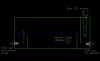
My entire sump level rises pretty much all at once, and stays there until more water evaporates from the system.
Here's an ACAD drawing of my sump. I don't remember exactly why I went with this baffle configuration,but it seemed like a good idea at the time
 What do you think I could change to make a surge device work on my tank?
Attachments
NateHanson
Non-member
Hey patrick, I think your sump will work great for a surge device, as long as fluctuation in sump level doesn't mess up your skimmer. You have tons of room for overflow in that sump, so the capacity of a surge device could be quite large. Keep in mind that you'll still want capacity for extra water in case your pumps shut down at the high end of the surge cycle. You don't want a flood before the electricity comes back on.
NateHanson said:Hey patrick, I think your sump will work great for a surge device, as long as fluctuation in sump level doesn't mess up your skimmer. You have tons of room for overflow in that sump, so the capacity of a surge device could be quite large. Keep in mind that you'll still want capacity for extra water in case your pumps shut down at the high end of the surge cycle. You don't want a flood before the electricity comes back on.
All good points Nate, thanks. I didn't even think about the skimmer. The water level in there changes with the sump level, kinda sucks
. I have a new return pump(going from an Iwaki MD55RLT to a Sequence Dart) and I have to reconfigure the sump plumbing, so I might just make a whole new sump the way I want and design it for a surge and possibly a different style of skimmer.NateHanson
Non-member
You just have to raise your "over" baffle between the sump and the return compartment, so the water level only fluctuates in the return compartment.
If it's easy to do, I'd probably increase the size of the width of the return compartment too, by moving the baffles to the right. That way your surge volume can be contained to that compartment, without screwing with the skimmer.
Nate
If it's easy to do, I'd probably increase the size of the width of the return compartment too, by moving the baffles to the right. That way your surge volume can be contained to that compartment, without screwing with the skimmer.
Nate

TheUltimateNoob
TheUltimateNoob
i'm not sure what a carlson surge device is but there was a pretty cool tank over on RC in the nano reef forum where a guy made a surge device on his 5g tank. let me see if i can find it.
TheUltimateNoob
TheUltimateNoob
NateHanson said:You just have to raise your "over" baffle between the sump and the return compartment, so the water level only fluctuates in the return compartment.
If it's easy to do, I'd probably increase the size of the width of the return compartment too, by moving the baffles to the right. That way your surge volume can be contained to that compartment, without screwing with the skimmer.
Nate
Thanks Nate, I'll keep those suggestions in mind when I take my sump off line to either modify or replace.

Paula
I'm still around . ..
I, too, researched this . . . and I concluded that my overflows would not handle the gushing volume of a surge, without having to lower my water level in the display tank to an undesirable level. The sudden gushing of 5, 6 or 10 gallons of water into your tank will add an enormous amount of turbulence, but will also overflow your tank unless you have adequate piping - and most of our tanks just can't handle it.
Instead I put in a tunze wavebox and have acheived ALMOST (not quite) the same result without the huge water level change.
One of our members has done a lot of work in this area and is using some DIY surges with excellent results. .. maybe he'll chime in . .
Instead I put in a tunze wavebox and have acheived ALMOST (not quite) the same result without the huge water level change.
One of our members has done a lot of work in this area and is using some DIY surges with excellent results. .. maybe he'll chime in . .
Similar threads


- Replies
- 1
- Views
- 522


Sponsors
Acro Garden
All Things Aquatic
Backwoods Reefs
Beantown Reefers
Blue Light Aquatics
Bull Reef Aquaculture
Classic Corals
Corals Kingdom
Crazy Corals
Cultivated Reef
Daves Corals
Frag Freaks
Frank's Frags
Joe's Fishy Business
Love The Reef
Mofo Corals
NEMO
On Point Corals
ReefBum
Reef Exclusive
The Coral Farm
Ultimate Corals
Wet Pets Emporium
WickedCoralGarden
All Things Aquatic
Backwoods Reefs
Beantown Reefers
Blue Light Aquatics
Bull Reef Aquaculture
Classic Corals
Corals Kingdom
Crazy Corals
Cultivated Reef
Daves Corals
Frag Freaks
Frank's Frags
Joe's Fishy Business
Love The Reef
Mofo Corals
NEMO
On Point Corals
ReefBum
Reef Exclusive
The Coral Farm
Ultimate Corals
Wet Pets Emporium
WickedCoralGarden