the paper is plastic and no word on it. it blue
I'm not expert with acrylic but I do have a deccent basic working knowledge.......
That doesn't sound like the best material to work with. I'm guessing it's lexan or something like that from HD/lowes?
All the acrylic materials that I've seen that are cooperative to work with come with a brown paper looking protective sheet with an adhesive film inside. Usually some printing on the paper but sometimes none. "Acrylite" and "Plexiglass" are good brands, but each also have a range of different materials sold under those names. It can get kind of complicated and I really don't know enough to expalin in any detail....
Anyway - I'm not too sure on the bonding qualities of other plastic materials (ie any of the clear or blue plastic film covered ones I've played with) but IME they are all quite hard to cut/machine cleanly. Usually a lot of melt and chipping. Grabby and scary on the router.
If you can't cut it cleanly, you might have major problems making anything strong with it?
On the "Pins method"
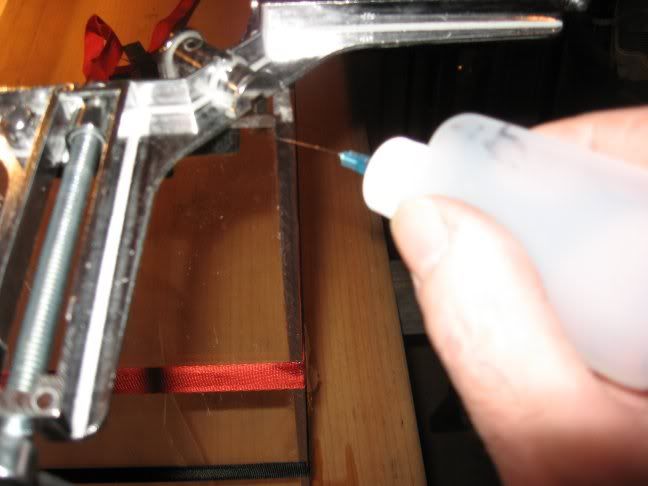
Yes, quite common for acrylic work. I use .010" or .012" metal guitar strings. You want the seams a little wet at first because as the solvent cures it evaporates so the puddles shrink. If the solvent along the seams is too little, the curing/evaporation process will suck in little bubbles making a weaker and less clean looking seam.
On weld-on
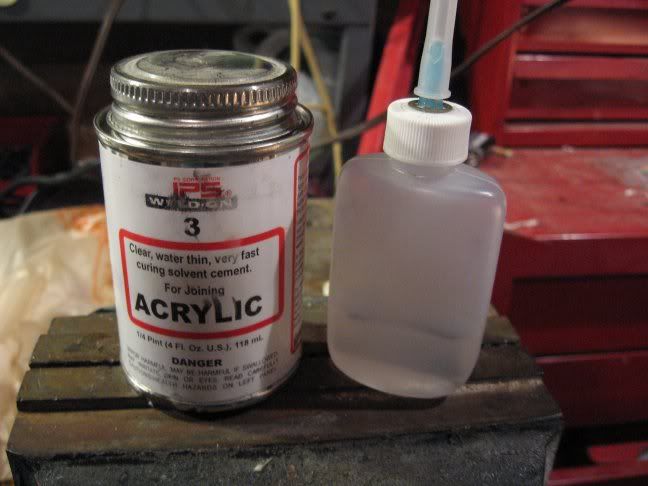
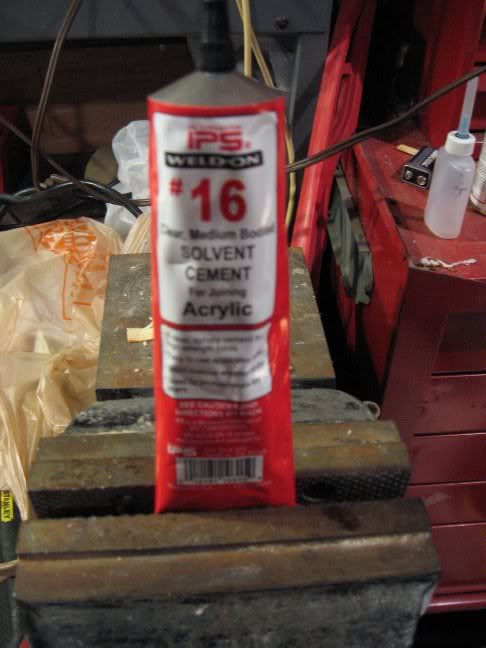
I've only used #4 and #16, can't comment on the difference between #3 and #4 (but I'd love to hear what others have to say?).
#4 makes a MUCH stronger bond than #16. #16 is like toothpaste and you can make repairs with it effectively. It's like smearing a strong glue over the outside of a bad seam to fix it. #4, if used right, will solidly melt the different acrylic peices into one, ie the seam is truely welded together.
HTH